Largest Inland Port
Welcome to Laredo, the Webb County seat on the Rio Grande across from Nuevo Laredo, Mexico — a 1755-founded border city that is the largest inland port in the United States.
Laredo is a city and the county seat of Webb County, in far South Texas on the north bank of the Rio Grande, directly across from Nuevo Laredo, Tamaulipas, Mexico. It lies about 150 miles south of San Antonio at the southern terminus of Interstate 35, and it anchors the largest metropolitan area on the Texas-Mexico border. Laredo is among the oldest cities in Texas. It was established in 1755 by Tomás Sánchez as a ferry crossing — unlike most Spanish settlements, which grew around missions or forts — and was named for Laredo, Spain. The town later served briefly as capital of the short-lived Republic of the Rio Grande, and after the Mexican-American War the U.S. Army established a post that became Fort McIntosh. Laredo's Spanish and Mexican heritage remains central to its identity: it is a predominantly Hispanic city whose culture bridges two nations. Trade defines modern Laredo. The city is the largest inland port in the United States and the busiest land port on the U.S.-Mexico border, handling hundreds of billions of dollars in goods annually and channeling trade along Interstate 35 into the heart of the country. Rail and air cargo supplement the truck traffic crossing the international bridges, and logistics, warehousing, and customs brokerage underpin the local economy. Laredo International Airport supports both commercial and cargo aviation. Beyond trade, Laredo is a substantial city of roughly 255,000 people with two major school districts — Laredo ISD and United ISD — and Texas A&M International University. Its signature event, the Washington's Birthday Celebration, began in 1898 and has grown into a month-long, binational festival attended by hundreds of thousands. Laredo suits families, international traders, and anyone drawn to a bilingual border metropolis with deep history, strong schools, and a gateway position in North American commerce.
Laredo is the county seat of Webb County, in far South Texas on the north bank of the Rio Grande, directly across from Nuevo Laredo, Mexico. It lies about 150 miles south of San Antonio at the southern end of Interstate 35.
Laredo was founded in 1755 by Tomás Sánchez as a ferry crossing on the Rio Grande, making it one of the oldest settlements in Texas. It was named for Laredo, Spain, and later served briefly as capital of the Republic of the Rio Grande.
Laredo is the largest inland port in the United States and the busiest land port on the U.S.-Mexico border, handling hundreds of billions of dollars in trade annually. Interstate 35 begins here, channeling goods from Mexico across the country.
Laredo is served by two large school districts - Laredo ISD and United ISD, the latter with about 50 schools and 40,000 students - plus private options. Texas A&M International University and Laredo College provide higher education.
The Washington's Birthday Celebration is a month-long festival held each February, begun in 1898. It features parades, the binational Abrazo ceremony with Nuevo Laredo, and the Jalapeño Festival, drawing hundreds of thousands of attendees.
Laredo lies about 150 miles south of San Antonio via Interstate 35. The Gulf Coast at Corpus Christi is roughly 150 miles northeast, and the city's airport and international bridges connect it to Mexico and the wider region.
City Guide
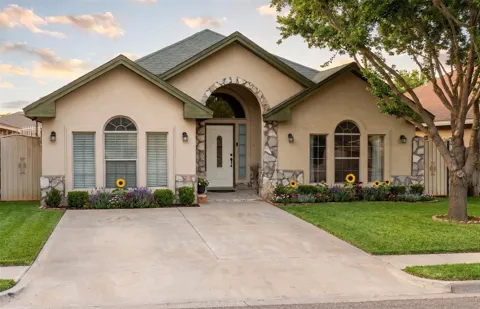
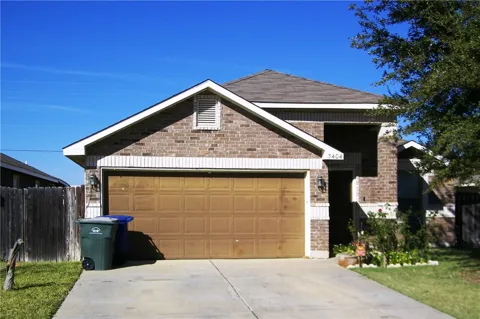
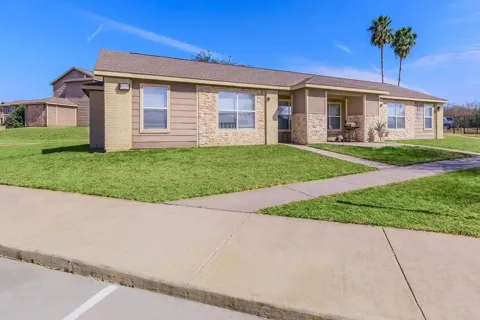
Laredo's housing market offers relative affordability for a Texas city its size, with a mix of older South Texas homes near downtown, mid-century subdivisions, and newer master-planned growth on the north and west sides. Neighborhoods such as Winfield and the La Bota Ranch/Wolf Creek area are known for well-kept single-family homes and strong schools, while gated and golf-course communities serve higher-end buyers. New construction has pushed northward along the Loop 20 corridor. Compared with San Antonio and other Texas metros, Laredo's home prices remain modest, drawing first-time buyers and growing families.
Laredo's growth has radiated north and west from its historic downtown along the river. The older central district and the El Azteca and San Agustín areas preserve the city's Spanish-colonial grid, while the north side — around Loop 20, McPherson Road, and Del Mar Boulevard — holds most of the newer subdivisions, shopping, and the Texas A&M International campus. Winfield and La Bota Ranch are among the most sought-after family neighborhoods. The Hillside and south Laredo areas have long-established communities near the bridges and industrial districts.
Laredo blends a bilingual border culture with a large-city pace. Spanish and English flow together in daily life, and the city's food — from taquerias and botanas platters to weekend barbacoa — is a point of pride. The month-long Washington's Birthday Celebration, with its parades, the binational Abrazo ceremony, and the Jalapeño Festival, anchors the social calendar. Families rely on the city's parks system, including North Central Park's water park and dog park, and on the university's cultural and athletic events. Cross-border ties with Nuevo Laredo shape commerce, family life, and cuisine.
Laredo is served by two major public school districts. Laredo Independent School District covers the central and south portions of the city, while United Independent School District, one of Texas's largest with about 50 schools and 40,000 students, serves the growing north and west sides. Both districts operate comprehensive elementary, middle, and high school networks, and private and parochial options are available. Texas A&M International University offers bachelor's and graduate programs on the city's north side, and Laredo College provides associate degrees and workforce training across the region.
Laredo is a continental crossroads. Interstate 35 begins here and runs north to San Antonio, Dallas–Fort Worth, and the Midwest, while U.S. Highways 83 and 59 and State Highway 359 fan out across South Texas. International bridges connect to Nuevo Laredo, and the city is a major rail and air-cargo hub, with Laredo International Airport serving commercial flights. The convergence of truck, rail, and air freight makes Laredo one of the busiest goods-movement points in North America, though the same corridors also handle daily commuter traffic.
Laredo offers a well-developed parks and recreation system, with dozens of parks, recreation centers, and splash pads across the city. North Central Park is a signature destination with a water park, dog park, trails, and event space, and Lake Casa Blanca International State Park, on a reservoir within the city, provides boating, fishing, camping, and swimming. Golf courses, youth sports leagues, and the cultural events of the Washington's Birthday Celebration round out local recreation. For broader getaways, San Antonio and the Gulf Coast are within a few hours.
MARKET SNAPSHOT
How homes have been selling here over the last 90 days.
Market data reflects closed sales over the last 90 days and is provided for informational purposes.
For sale
Handpicked properties hitting the scene in your area.
For sale
Handpicked properties hitting the scene in your area.
For sale
Handpicked properties hitting the scene in your area.
BROWSE BY ZIP
Browse listings by postal code in this area.
1921 Lohmans Crossing #100 Austin, TX 78734