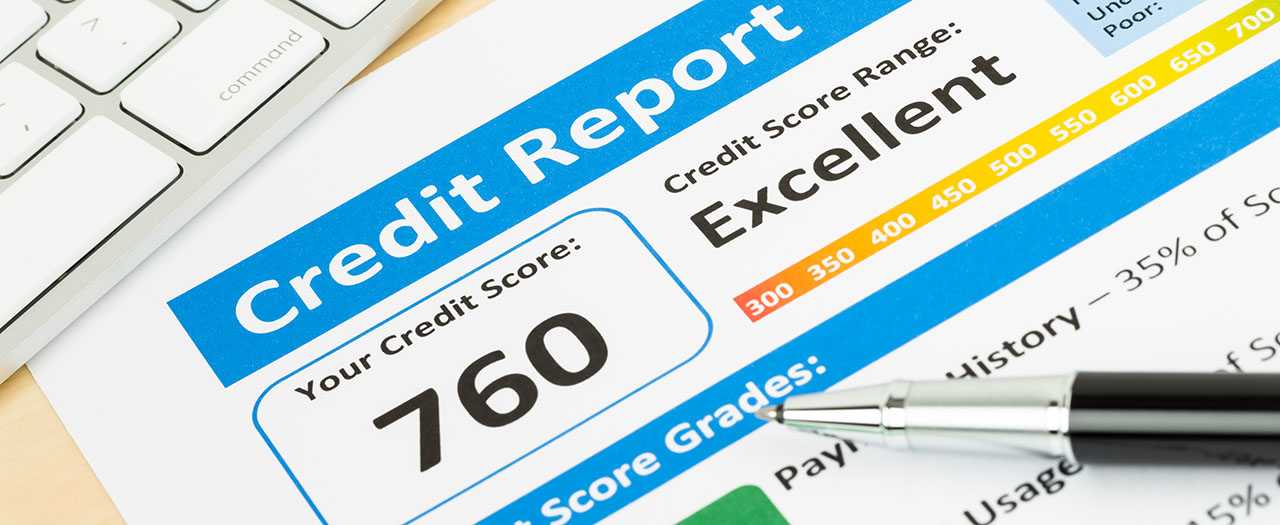
Years ago, credit scoring had little to do with mortgage lending. When reviewing the credit worthiness of a borrower, an underwriter would make a subjective decision based on past payment history.
Then things changed.
Lenders studied the relationship between credit scores and mortgage delinquencies. There was a definite relationship. Almost half of those borrowers with FICO® scores below 550 became ninety days delinquent at least once during their mortgage. On the other hand, only two out of every 10,000 borrowers with FICO® scores above eight hundred became delinquent.
So lenders began to take a closer look at FICO® scores and this is what they found out. The chart below shows the likelihood of a ninety day delinquency for specific FICO® scores.
| FICO® Score |
Odds of a Delinquent Account |
| 595 |
2 to 1 |
| 600 |
4 to 1 |
| 615 |
9 to 1 |
| 630 |
18 to 1 |
| 645 |
36 to 1 |
| 660 |
72 to 1 |
| 680 |
144 to 1 |
| 780 |
576 to 1 |
If you were lending a couple hundred thousand dollars, who would you want to lend it to?
FICO® Scores, What Affects Them, How Lenders Look At Them
Imagine a busy lending office and a loan officer has just ordered a credit report. He hears the whir of the laser printer and he knows the pages of the credit report are going to start spitting out in just a second. There is a moment of tension in the air. He watches the pages stack up in the collection tray, but he waits to pick them up until all of the pages are finished printing. He waits because FICO® scores are located at the end of the report. Previously, he would have probably picked them up as they came off. A FICO® above 700 will evoke a smile, then a grin, perhaps a shout and a “victory” style arm pump in the air. A score below 600 will definitely result in a frown, a furrowed brow, and concern.
FICO® stands for Fair Isaac & Company, and credit scores are reported by each of the three major credit bureaus: TRW (Experian), Equifax, and Trans-Union. The score does not come up exactly the same on each bureau because each bureau places a slightly different emphasis on different items. Scores range from 365 to 840.
Some of the things that affect your FICO® scores:
- Delinquencies
- Too many accounts opened within the last twelve months
- Short credit history
- Balances on revolving credit are near the maximum limits
- Public records, such as tax liens, judgments, or bankruptcies
- No recent credit card balances
- Too many recent credit inquiries
- Too few revolving accounts
- Too many revolving accounts
Sounds confusing, doesn’t it?
The credit score is actually calculated using a scorecard where you receive points for certain things. Creditors and lenders who view your credit report do not get to see the scorecard, so they do not know exactly how your score was calculated. They just see the final scores.
Basic guidelines on how to view the FICO® scores vary a little from lender to lender. Usually, a score above 680 will require a very basic review of the entire loan package. Scores between 640 and 680 require more thorough underwriting. Once a score gets below 640, an underwriter will look at a loan application with a more cautious approach. Many lenders will not even consider a loan with a FICO® score below 600, some as high as 620.
FICO® Scores and Interest Rates
Credit scores can affect more than whether your loan gets approved or not. They can also affect how much you pay for your loan, too. Some lenders establish a base price and will reduce the points on a loan if the credit score is above a certain level. For example, one major national lender reduces the cost of a loan by a quarter point if the FICO® score is greater than 725. If it is between 700 and 724, they will reduce the cost by one-eighth of a point. A point is equal to one percent of the loan amount.
There are other lenders who do it in reverse. They establish their base price, but instead of reducing the cost for good FICO® scores, they add on costs for lower FICO® scores. The results from either method would work out to be approximately the same interest rate. It is just that the second way looks better when you are quoting interest rates on a rate sheet or in an advertisement.
FICO® Scores and Mortgage Underwriting Decisions
FICO® Scores as Guidelines
FICO® scores are only guidelines and factors other than FICO® scores also affect underwriting decisions. Some examples of compensating factors that will make an underwriter more lenient toward lower FICO® scores can be a larger down payment, low debt-to-income ratios, an excellent history of saving money, and others. There also may be a reasonable explanation for items on the credit history report that negatively impact your credit score.
They Don’t Always Make Sense
Even so, sometimes credit scores do not seem to make any sense at all. One borrower with a completely flawless credit history can have a FICO® score below 600. One borrower with a foreclosure on her credit report can have a FICO® above 780.
Portfolio & Sub-Prime Lenders
Finally, there are a few portfolio lenders who do not even look at credit scoring, at least on their portfolio loans. A portfolio lender is usually a savings & loan institution that originates some adjustable rate mortgages that they intend to keep in their own portfolio rather than selling them in the secondary mortgage market. These lenders may look at home loans differently. Some concentrate on the value of the home. Some may concentrate more on the savings history of the borrower. There are also sub-prime lenders, or “B & C paper” lenders, who will provide a home loan, but at a higher interest rate and cost.
Running Credit Reports
One thing to remember when you are shopping for a home loan is that you should not let numerous mortgage lenders run credit reports on you. Wait until you have a reasonable expectation that they are the lender you are going to use to obtain your home loan. Not only will you have to explain any credit inquiries in the last ninety days, but also numerous inquiries will lower your FICO® score by a small amount. This may not matter if your FICO® is 780, but it would matter if it is 642.
Don’t Buy A Car Just Before Looking for a Home!
A word of advice not directly related to FICO® scores. When people begin to think about the possibility of buying a home, they often think about buying other big-ticket items, such as cars. Quite often when someone asks a lender to pre-qualify them for a home loan there is a brand new car payment on the credit report. Often, they would have qualified in their anticipated price range except that the new car payment has raised their debt-to-income ratio, lowering their maximum purchase price. Sometimes they have bought the car so recently that the new loan doesn’t even show up on the credit report yet, but with six to eight credit inquiries from car dealers and automobile finance companies it is kind of obvious. Almost every time you sit down in a car dealership, it generates two inquiries into your credit.
Credit History is Important
Nowadays, credit scores are important if you want to get the best interest rate available. Protect your FICO® score. Do not open new revolving accounts needlessly. Do not fill out credit applications needlessly. Do not keep your credit cards nearly maxed out. Make sure you do use your credit occasionally. Always make sure every creditor has their payment in their office no later than 29 days past due.
And never ever be more than thirty days late on your mortgage. Ever.